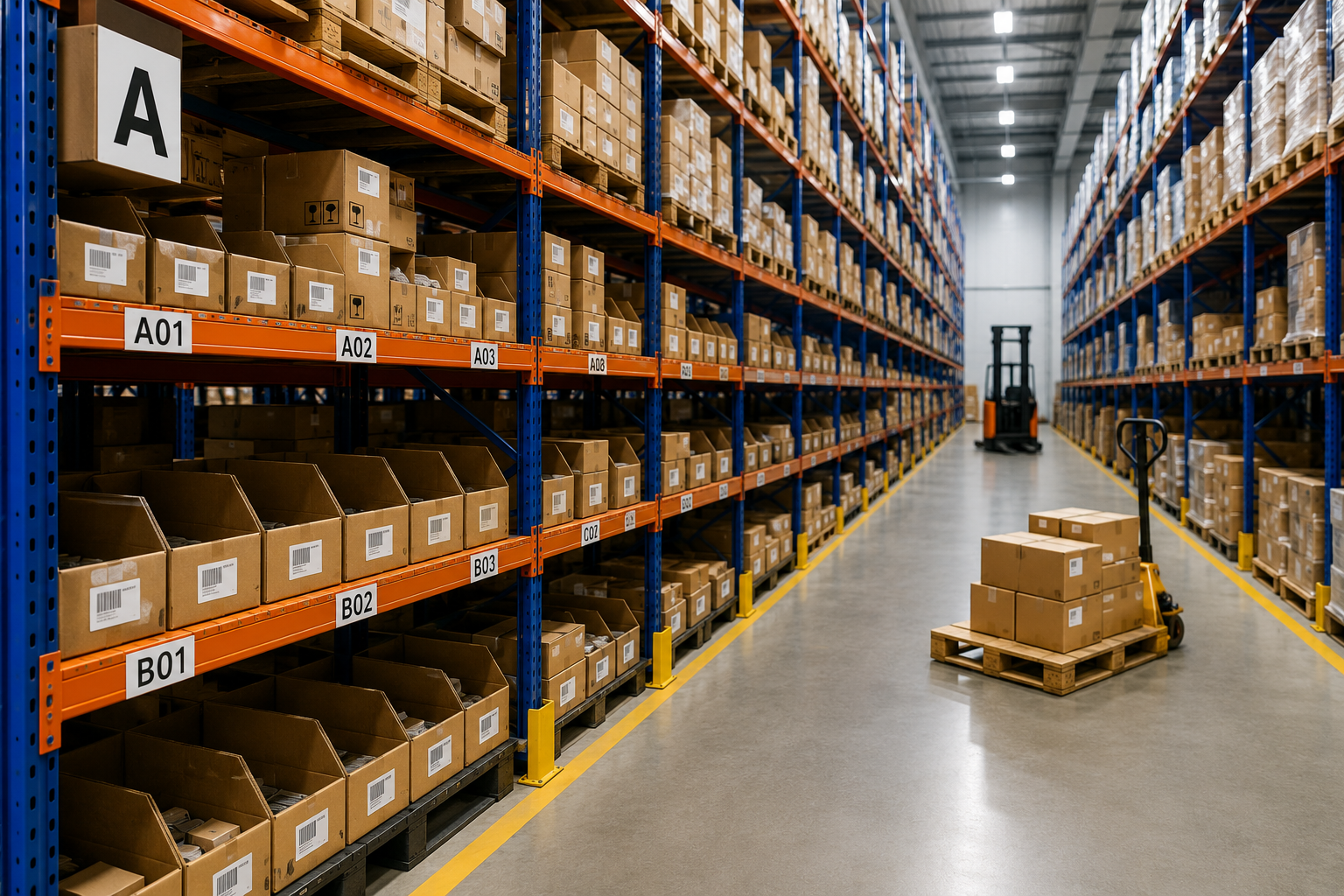
What Is Warehouse Slotting? A Complete Guide to Faster Picking and Better Inventory Accuracy
What Is Warehouse Slotting? A Complete Guide to Faster Picking and Better Inventory Accuracy
In a busy warehouse, every second counts. When employees spend unnecessary time walking between aisles, searching for products, or navigating inefficient layouts, those small delays quickly add up. Over hundreds or thousands of orders, they can significantly reduce productivity and increase operating costs.
That's where warehouse slotting comes in.
Warehouse slotting is one of the most effective ways to improve operational efficiency without expanding your facility or hiring additional staff. By strategically assigning inventory to the most appropriate storage locations, businesses can reduce travel time, improve picking accuracy, and make better use of available warehouse space.
Whether you operate a distribution center, manage a third-party logistics (3PL) operation, or oversee inventory for a growing business, understanding warehouse slotting can help you build a faster and more organized operation.
What Is Warehouse Slotting?
Warehouse slotting is the process of determining the optimal storage location for every product within a warehouse.
Rather than placing inventory wherever space is available, slotting considers factors such as:
- Product demand
- Order frequency
- Product size and weight
- Picking methods
- Seasonal demand
- Storage requirements
The objective is simple: place products where they can be picked as efficiently and accurately as possible.
For example, a product that appears on hundreds of customer orders every week should generally be stored in an easily accessible location close to the shipping area. On the other hand, slower-moving inventory may be stored farther away since it is accessed less frequently.
Why Warehouse Slotting Matters
Without a deliberate slotting strategy, warehouses often develop inefficient layouts over time. Products get moved to temporary locations, inventory expands into available space, and high-demand items become scattered throughout the facility.
The result is longer travel distances, slower picking, and more opportunities for mistakes.
An effective slotting strategy offers several benefits:
Faster Order Picking
In most warehouses, walking is one of the largest contributors to labor costs. Reducing the distance employees travel between picks can significantly increase the number of orders completed each day.
Even modest improvements in travel time can have a meaningful impact when multiplied across hundreds of daily picks.
Improved Inventory Accuracy
Clearly defined storage locations make it easier for employees to locate the correct inventory quickly. This reduces the likelihood of picking the wrong product or quantity while also making cycle counting and inventory audits more efficient.
Better Use of Warehouse Space
Proper slotting helps maximize existing storage capacity by placing products where they fit best. This reduces congestion in high-traffic areas while improving the overall flow of inventory throughout the warehouse.
Enhanced Employee Productivity
Employees perform better when storage locations follow a logical structure. Less time searching for products means more time completing productive work.
Well-organized facilities also simplify training for new employees, allowing them to become productive more quickly.
Factors to Consider When Slotting Inventory
There is no universal slotting strategy that works for every warehouse. The optimal layout depends on the products you store and how your operation functions.
Some of the most important considerations include:
Product Velocity
Fast-moving products should generally occupy the most accessible storage locations.
Many warehouses categorize inventory into groups such as:
- A items: Frequently picked products
- B items: Moderately active inventory
- C items: Slow-moving inventory
This approach ensures that employees spend most of their time near the products they pick most often.
Product Size and Weight
Heavy or oversized products should typically be stored in locations that minimize unnecessary lifting and handling.
Smaller items may be placed in shelving systems that maximize storage density while maintaining easy access.
Products Frequently Ordered Together
Reviewing historical order data can reveal products that commonly ship together.
Storing these items near one another reduces travel time and improves picking efficiency.
Seasonal Demand
Demand patterns change throughout the year.
Products that become popular during certain seasons may benefit from temporary relocation to more accessible storage locations before peak demand begins.
Picking Method
Your picking strategy also influences slotting decisions.
Whether your operation uses discrete picking, batch picking, zone picking, or wave picking, inventory locations should support the workflow your employees use every day.
Common Warehouse Slotting Mistakes
Even warehouses with good intentions can make slotting decisions that reduce efficiency over time.
Some common mistakes include:
Assigning products to random available locations.
While convenient in the short term, random placement often creates unnecessary travel and inconsistent workflows.
Never reevaluating inventory locations.
Customer demand changes over time. Products that were slow movers last year may become best sellers today.
Regular slotting reviews help ensure your layout continues to support current demand.
Ignoring warehouse traffic flow.
Poorly positioned inventory can create bottlenecks where multiple employees compete for access to the same aisle or storage area.
Failing to maintain accurate location data.
Even the best slotting strategy loses value if inventory records no longer reflect where products are actually stored.
Best Practices for Warehouse Slotting
Organizations looking to improve warehouse performance should consider several best practices.
Analyze historical order data. Use actual sales and fulfillment trends instead of assumptions when deciding where inventory belongs.
Review slotting regularly. Quarterly or semiannual evaluations can help ensure inventory locations continue supporting operational needs.
Standardize location naming conventions. A consistent location structure makes training easier and reduces confusion.
Balance accessibility with space utilization. Not every product belongs in the most convenient location. Prioritize accessibility for items that generate the greatest operational impact.
Measure performance. Monitor metrics such as picking time, travel distance, inventory accuracy, and order throughput to evaluate whether slotting changes are producing measurable improvements.
The Role of Warehouse Management Software
While smaller operations may initially manage slotting manually, growing warehouses often benefit from using warehouse management software (WMS) to maintain accurate location information.
A WMS provides visibility into where inventory is stored, tracks product movement throughout the facility, and supports organized picking workflows. Having accurate location data also makes cycle counting, replenishment, and inventory audits more efficient.
As operations grow in complexity, maintaining consistent slotting manually becomes increasingly difficult. Technology helps ensure employees always know where inventory belongs and where it can be found.
Final Thoughts
Warehouse slotting is more than simply deciding where products should be stored. It is a continuous process of organizing inventory to support faster picking, improved accuracy, and better use of warehouse resources.
By evaluating product demand, storage requirements, and operational workflows, businesses can create layouts that reduce unnecessary movement and improve overall efficiency.
Whether you're optimizing an existing facility or designing a new warehouse, investing time in a thoughtful slotting strategy can deliver long-term improvements in productivity, inventory accuracy, and customer satisfaction.
Try now 3gistics to discover logistics that are efficient, effective, and customized to your needs.